



Get to know our Handle Force Sensor
- Handle force sensor that enables real-time force sensing at the grip
It is a force sensor built for mobility aids, delivering real-time sensing of push and pull so your controller can act on clean intent. Mobility aids anticipate with intent, wheelchairs assist as you push, carts ease as you relax, effort-based control without extra interfaces.
Make Equipment Anticipate You
Inside the grip, a compact sensing core delivers continuous load sensing and streams a clean signal to your controller, no extra interface needed. The working window spans from minus one hundred to plus one hundred newtons, with a sensitive response in the order of twenty to fifty millivolts per newton, which makes assist curves smooth and predictable. In practice, a gentle push provides help, a stronger push offers instant support, and when you relax, the system eases off.
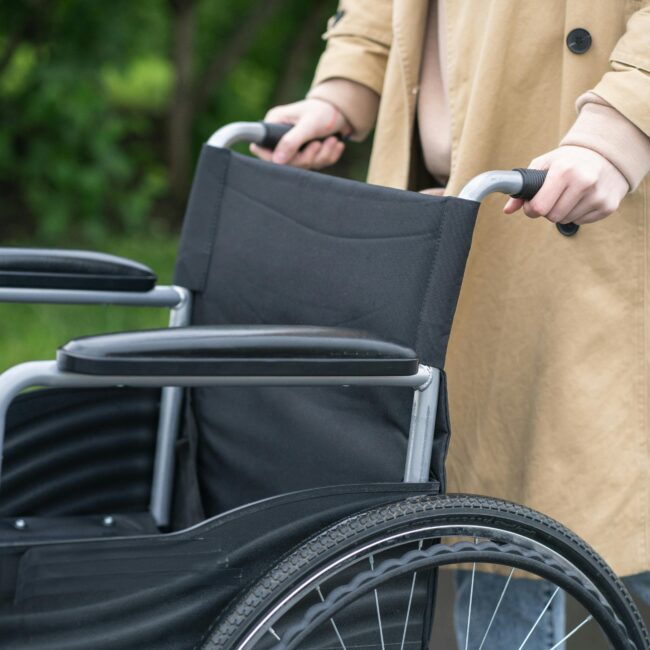
This is true load measurement at the handle, capturing axial load and tensile load along the primary push-pull direction, so the controller reacts to what the user intends. It feels intuitive on wheelchairs, hospital beds, rehab devices and powered carts, because the control lives where the hand already is.
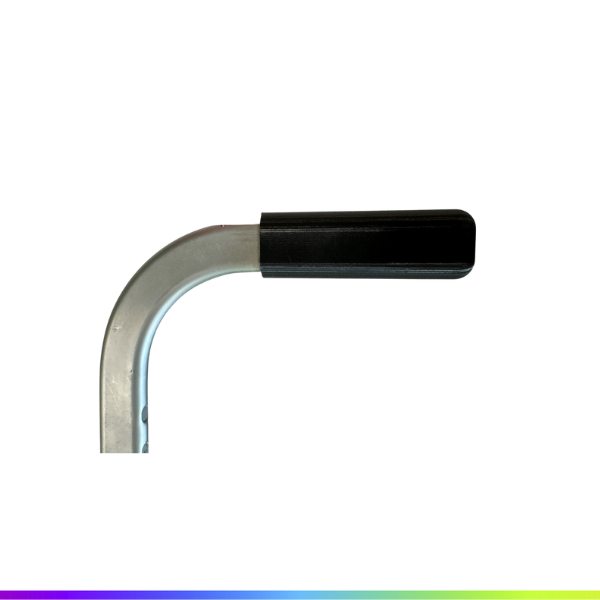
Integration Shaped to Your Handle
The handle force sensor is fully customizable to your geometry. We co-design the mechanical envelope, the grip interface, and the signal path so it fits your product without forcing a one-size approach. This is a custom force sensor program, not a drop-in adapter. The result is an engineered fit with custom sleeves or bar designs when needed, validated on your bench and in your system, so effort-based control feels natural in your exact use case.
Moments that Prove the Value
You feel it the moment a hand meets the handle. A caregiver guides a hospital bed, and it helps rather than resists. A wheelchair responds to the push you intend, instead of an all-or-nothing click. A powered cart moves when the operator leans in and settles when the grip relaxes.
The handle force sensor turns intention into motion at the point of touch, so stop start corridors feel smoother, tight turns feel controlled, and daily tasks feel lighter. This is mobility aid force sensing where it matters, inside the handle, with stable sensor data your controller can trust and no extra user interface in the way. The same stream can be used as load data during testing to tune assist curves and confirm behaviour across variants.

Built Together, Tuned to You
Retrofit-friendly, the sensor fits into standard grip geometries with minimal redesign. Cost-efficient to integrate, the architecture keeps electronics simple while delivering a sensitive signal. Responsive by design, typical working range around minus one hundred to plus one hundred newton with sensitivity in the order of twenty to fifty millivolt per newton, low hysteresis for smooth control, robust AL 7075 build, compact bar size roughly seventeen by thirty millimetre, sensor mass about sixty grams, maximum force headroom up to one thousand newton for durability. These attributes make the signal stable for assist profiles and safe to scale across variants.
For engineering teams, integration is straightforward into data acquisition workflows, and supports data logging during prototype and pilot phases so you can quantify thresholds, refine mapping, and lock in predictable performance.
Co-development is available now. We adapt the sensing core to your handle geometry and system requirements, delivering an engineered fit and guiding the path from prototype to pilot and scale. No clinical claims and no certifications, the sensor augments the operator and keeps the human in the loop.
Contact us now to integrate our sensor technology in your next project, email info@forcesure.nl
Leave a Reply